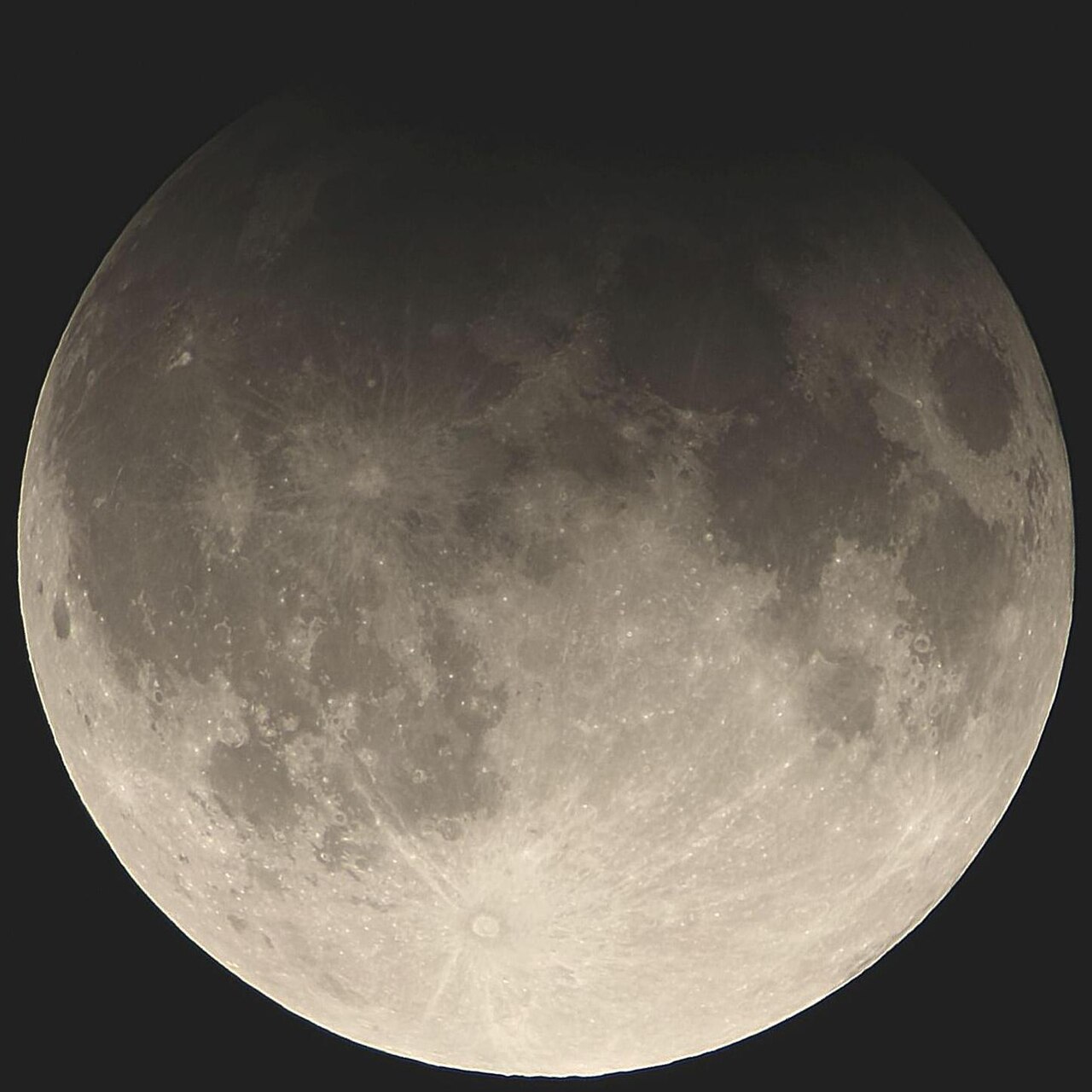
September's Subtle Lunar Eclipse: Dates, Times & Viewing Tips
As summer's warmth begins its gentle retreat in the Northern Hemisphere, and spring awakens in the Southern, the cosmos offers a final, exquisite celestial spectacle to mark the seasonal transition. Get ready to cast your gaze skyward for what promises to be a truly unique Summer's End Lunar Eclipses: Your Guide to September Events: a subtle partial lunar eclipse gracing our skies on the night of September 17th into September 18th, 2024. While not a dramatic blood moon, this event – often referred to as an eclipse lunar verano in regions where summer is drawing to a close – is a delicate dance between Earth, Moon, and Sun, inviting observers to appreciate the intricate mechanics of our solar system with keen attention.
Unlike the fiery spectacle of a total lunar eclipse, this particular event is a modest affair. The Moon, full and luminous, will appear as if a tiny "bite" has been taken out of its edge, a whisper of Earth's shadow falling across its surface. It's an astronomical phenomenon that rewards patience and careful observation, reminding us that beauty comes in many forms, even the most understated.
What to Expect: A Glimpse of the Earth's Shadow
A lunar eclipse occurs when the Earth positions itself directly between the Sun and the Moon, casting its shadow upon our natural satellite. This September, we'll witness a partial lunar eclipse, meaning only a fraction of the Moon will pass through the Earth's darker, central shadow (the umbra). The phenomenon is so understated that astronomers describe it as "pequeñito" (tiny) – not an affectionate nickname, but an accurate depiction of its minimal impact.
Indeed, this specific event is characterized by a very low magnitude. A mere 3.5% of the Moon's disk will be touched by the deepest part of Earth's shadow, resulting in a subtle obscuration. The overall magnitude of the umbral eclipse will be just 0.085, a stark contrast to a total lunar eclipse where the magnitude can reach 1.0 or more. This means the visual effect will be more of a slight dimming or a faint smudge on the lunar limb, rather than a dramatic darkening or reddening. For those accustomed to the grandeur of a total lunar eclipse, this September event offers a different kind of charm, requiring a more focused and appreciative eye.
The Earth's shadow actually has two main parts: the outer, lighter shadow known as the penumbra, and the inner, darker shadow called the umbra. The September eclipse will unfold in distinct phases:
- Penumbral Phase: This is the initial and final stage of any lunar eclipse. As the Moon enters the Earth's penumbra, the dimming is incredibly subtle and often goes unnoticed by the casual observer. It's more of a gradual, almost imperceptible reduction in brightness.
- Partial Phase: This is where the action truly begins, albeit in a modest way for this particular eclipse. As a small portion of the Moon enters the darker umbra, you'll start to notice the distinctive "bite" out of the lunar disk. This is the most noticeable part of the entire event, though even here, the obscuration will be slight.
For a deeper dive into what makes this eclipse so unique in its subtlety, you can read more in our dedicated article: Partial Lunar Eclipse Sept 18: What to Expect from a Small Bite.
Dates and Times: When to Witness the September Sky Show
The subtle eclipse lunar verano will unfold primarily on the night of Wednesday, September 18th, 2024, UTC. However, due to time zone differences, for many in the Americas, the event will begin on the evening of Tuesday, September 17th. Here are the precise timings in Universal Coordinated Time (UTC), which serves as the international standard:
- Wednesday, September 18, 2024, at 00:41 UTC: The penumbral eclipse begins. The Moon starts its imperceptible journey into Earth's lighter shadow.
- Wednesday, September 18, 2024, at 02:12 UTC: The partial eclipse begins. This is when the Moon starts to enter the darker umbra, and the "bite" will gradually become visible.
- Wednesday, September 18, 2024, at 02:44 UTC: The partial eclipse reaches its maximum. This is the peak moment when the largest portion (approx. 3.5%) of the Moon will be obscured.
- Wednesday, September 18, 2024, at 03:15 UTC: The partial eclipse ends. The Moon exits the umbra, and the visible "bite" disappears.
- Wednesday, September 18, 2024, at 04:47 UTC: The penumbral eclipse ends. The Moon fully exits Earth's shadow, returning to its usual full brightness.
To make it easier for stargazers across different continents, here are the local times when the partial eclipse will reach its maximum (equivalent to 02:44 UTC) in various major cities:
- Madrid (Spain): September 18, 2024, at 04:44 AM
- Ciudad de México (Mexico): September 17, 2024, at 08:44 PM
- Buenos Aires (Argentina): September 17, 2024, at 11:44 PM
- Bogotá (Colombia): September 17, 2024, at 09:44 PM
- Lima (Peru): September 17, 2024, at 09:44 PM
- Caracas (Venezuela): September 17, 2024, at 10:44 PM
- Santiago (Chile): September 17, 2024, at 11:44 PM
- La Paz (Bolivia): September 17, 2024, at 10:44 PM
- Washington, D.C. (USA): September 17, 2024, at 10:44 PM
Remember to adjust these times for your specific location if you are not in one of the listed cities. A quick online search for "UTC to [Your City] time converter" will provide accurate local timings for all phases.
Where to See It: Visibility and Viewing Tips
The good news is that this Partial Lunar Eclipse Sept 18: What to Expect from a Small Bite will be visible across a wide geographical area, including all of Europe, most of Africa, Asia, Australia, and a significant portion of the Americas. As with all lunar eclipses, no special equipment is needed to view it, making it accessible to everyone. Simply look up!
However, due to the subtle nature of this event, successful observation hinges on a few key factors:
- Clear Skies: This is paramount. Any significant cloud cover will obscure your view of the Moon and the faint eclipse. Check local weather forecasts well in advance.
- Unobstructed Horizon: Ensure you have a clear view of the eastern horizon (as the Moon rises) or simply an open sky where the full Moon will be visible for the duration of the eclipse. Buildings, trees, and mountains can easily block your view.
- Dark Location: While not as critical as for meteor showers, minimizing light pollution will enhance your chances of perceiving the subtle dimming. Streetlights, house lights, and city glow can all detract from the experience.
- Patience and Close Attention: This is perhaps the most important tip for this particular eclipse. Unlike a dramatic total eclipse, the changes will be gradual and delicate. Allow your eyes to adjust to the darkness, and observe the Moon for extended periods. You might notice a slight, faint discoloration or a reduction in brightness on one edge, rather than a distinct shadow.
- Binoculars (Optional, but Recommended): While not strictly necessary, a pair of binoculars can significantly enhance your viewing experience. They won't make the eclipse "darker," but they will magnify the Moon, making it easier to spot the subtle changes in brightness and the faint outline of the Earth's umbral shadow on its limb.
- Star Map Apps: If you're unsure where the Moon will be in the sky, use a star-gazing application on your smartphone or tablet. These apps can accurately show you the Moon's position relative to your location, helping you orient yourself and find the best viewing spot.
- Comfort: The eclipse spans several hours, even its subtle phases. If you plan to observe for a while, dress warmly, bring a comfortable chair, and perhaps a warm drink.
Remember, unlike solar eclipses, it is perfectly safe to look directly at a lunar eclipse without any protective eyewear.
The Significance of a Subtle Eclipse
Even though this eclipse lunar verano on September 17-18 isn't a showstopper in the traditional sense, it holds its own unique significance. For many in the Northern Hemisphere, it's a quiet astronomical farewell to summer, a moment of reflection as longer nights begin. In the Southern Hemisphere, it heralds the arrival of spring, a symbol of renewed celestial activity.
Subtle eclipses like this one are a wonderful reminder of the constant, intricate celestial dance happening above us. They challenge us to slow down, pay closer attention, and appreciate the nuanced beauty of the universe. It’s an opportunity to connect with the cosmos on a more personal, meditative level, rather than a purely spectacular one.
Moreover, every eclipse, regardless of its magnitude, offers invaluable data for astronomers studying Earth's atmosphere, the Moon's surface, and the precise orbital mechanics of our solar system. For us on Earth, it's a chance to witness the Earth's shadow, a rarely seen projection of our own planet, cast upon our closest celestial neighbor.
While this particular event is a modest partial eclipse, the universe is full of wonders. The next total lunar eclipse is on the horizon, promising a more dramatic display for future stargazers. But for now, let's savor the delicate beauty of September's subtle lunar eclipse.
Don't Miss This End-of-Summer Celestial Treat
The subtle partial lunar eclipse of September 17-18, 2024, is a perfect opportunity to step outside, look up, and connect with the rhythm of the cosmos. Whether you call it an eclipse lunar verano or simply a fascinating astronomical event, its understated beauty and the challenge it presents to the observer make it a rewarding experience. Mark your calendars, find your perfect viewing spot, and prepare to witness the gentle kiss of Earth's shadow on the full Moon. It’s a quiet, profound reminder of our place in the universe and the continuous celestial ballet that plays out above our heads.