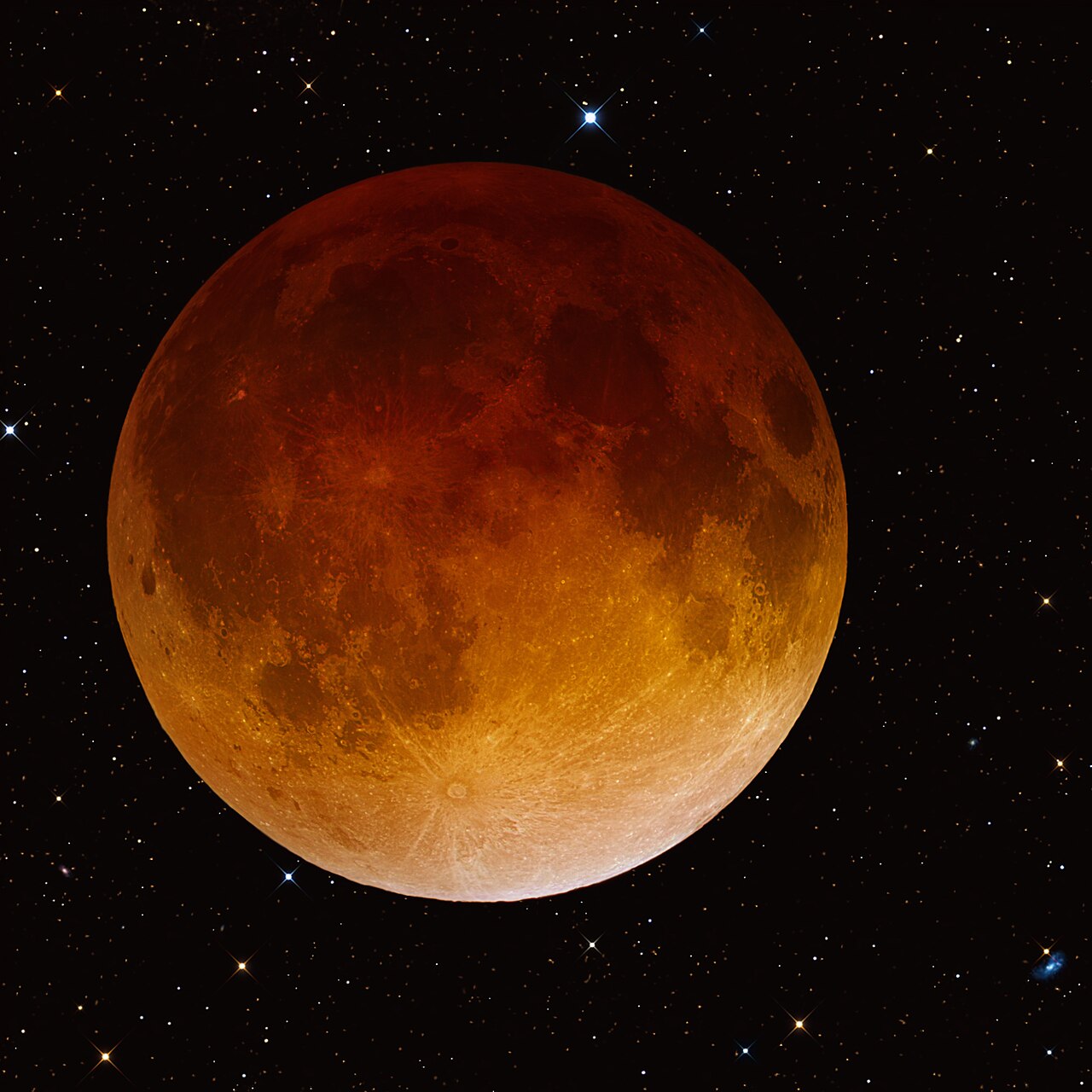
As summer's warm embrace gradually gives way to the crisp air of autumn, the celestial canvas offers one last enchanting spectacle before the seasonal shift. September brings with it a unique astronomical event, a subtle yet significant eclipse lunar verano that promises to captivate skygazers across vast stretches of the globe. This guide provides all you need to know about the upcoming lunar event, transforming a seemingly small phenomenon into an opportunity for cosmic connection.
Far from the dramatic flair of a total blackout, this particular lunar eclipse is a testament to the intricate dance between Earth, Moon, and Sun. It’s an invitation to pay closer attention, to appreciate the delicate interplay of shadows that paints our night sky. Whether you're a seasoned astronomer or a casual observer, preparing for this event will ensure you make the most of this celestial farewell to summer.
A September Farewell: The Partial Lunar Eclipse on September 17-18
Mark your calendars for the night of September 17th into the early hours of September 18th, 2024. This is when a small, yet intriguing, partial lunar eclipse will grace our skies. Coinciding with the September Full Moon, often known as the Harvest Moon, this event adds a layer of mystical charm to the transition between seasons.
What makes this eclipse unique is its understated nature. While many dream of the dramatic crimson hues of a total lunar eclipse, this one is often described as a "small bite" out of the Moon. This isn't just an affectionate term; it accurately reflects the subtle visual experience. Only a mere 3.5% of the Moon's surface will be obscured by the Earth's darkest shadow, making it a phenomenon that rewards careful observation.
Despite its modest magnitude, the visibility of this partial lunar eclipse is remarkably widespread. Observers across Europe, Africa, Asia, Australia, and the Americas (particularly Eastern regions) will have a chance to witness the Earth's shadow subtly caress our lunar neighbor. This means millions of people, from bustling cityscapes to serene rural landscapes, can look up and connect with this celestial event. For more detailed insights into what to expect from this subtle event, you can delve into Partial Lunar Eclipse Sept 18: What to Expect from a Small Bite.
Unpacking the "Small Bite": Penumbra and Umbra Explained
To truly appreciate this September eclipse lunar verano, it's helpful to understand the mechanics of a lunar eclipse and the nature of Earth's shadow. The Earth casts two distinct types of shadows into space: the penumbra and the umbra.
- The Penumbra: This is the outer, lighter part of the Earth's shadow. When the Moon passes through the penumbra, it experiences a penumbral eclipse. The dimming is very subtle, often barely perceptible to the naked eye. It might appear as if the Moon is just slightly hazy or less bright than usual.
- The Umbra: This is the inner, darkest part of the Earth's shadow. When the Moon enters the umbra, we witness a partial or total lunar eclipse. During a partial eclipse, only a portion of the Moon passes through this deep shadow, creating the distinct "bite" or dark smudge on the lunar surface.
For the September 17-18 event, the Moon will pass through both these zones. The key phase for observation will be when the Moon enters the umbra, leading to the partial eclipse. Astronomers measure the extent of a lunar eclipse using a magnitude scale, where a magnitude of 1.0 represents a total eclipse. This upcoming event has a very low umbral magnitude of approximately 0.085. This low number reiterates that the visible darkening will be slight, requiring focused attention to discern the Earth's shadow creeping across the lunar disk. It's a fantastic exercise in patience and keen observation for any skywatcher.
Global Viewing Times: When and Where to Witness the Shadow
To ensure you don't miss a moment of this late eclipse lunar verano, precise timing is crucial. All timings for celestial events are typically given in Coordinated Universal Time (UTC) to provide a global standard. Remember to convert these to your local time zone.
Key Phases in UTC:
- Penumbral Eclipse Begins: 18/09/2024 at 00:41 UTC
- Partial Eclipse Begins: 18/09/2024 at 02:12 UTC (This is when the visible "bite" starts)
- Maximum Partial Eclipse: 18/09/2024 at 02:44 UTC (The deepest point of the "bite")
- Partial Eclipse Ends: 18/09/2024 at 03:15 UTC (The visible "bite" disappears)
- Penumbral Eclipse Ends: 18/09/2024 at 04:47 UTC
The entire event, from the start of the penumbral phase to its conclusion, will span several hours. However, the most compelling part for most observers will be the partial phase, lasting just over an hour. This is when the Earth's umbra creates the noticeable (albeit small) shadow on the Moon.
Local Times for Maximum Partial Eclipse (equivalent to 02:44 UTC):
To help you prepare, here are some maximum eclipse times for various major cities around the world:
- Madrid (Spain): 18/09/2024 at 04:44 AM CEST
- London (UK): 18/09/2024 at 03:44 AM BST
- Paris (France): 18/09/2024 at 04:44 AM CEST
- Berlin (Germany): 18/09/2024 at 04:44 AM CEST
- New York (USA): 17/09/2024 at 10:44 PM EDT
- Washington, D.C. (USA): 17/09/2024 at 10:44 PM EDT
- Mexico City (Mexico): 17/09/2024 at 08:44 PM CDT
- Bogotá (Colombia): 17/09/2024 at 09:44 PM COT
- Lima (Peru): 17/09/2024 at 09:44 PM PET
- Caracas (Venezuela): 17/09/2024 at 10:44 PM VET
- La Paz (Bolivia): 17/09/2024 at 10:44 PM BOT
- Santiago (Chile): 17/09/2024 at 11:44 PM CLST
- Buenos Aires (Argentina): 17/09/2024 at 11:44 PM ART
For more specific local times and comprehensive viewing tips tailored to different regions, make sure to check out September's Subtle Lunar Eclipse: Dates, Times & Viewing Tips.
Maximizing Your Eclipse Experience: Tips for Skywatchers
Even though this eclipse lunar verano is described as "small," observing it can be a deeply rewarding experience. Here's how to make the most of it:
- Find Your Perfect Spot:
- Dark Skies: While lunar eclipses are visible even from light-polluted areas, finding a spot away from city lights will enhance the contrast and make the subtle shadow more apparent.
- Clear Horizon: Ensure you have an unobstructed view of the Moon's path across the sky. Use a compass or a stargazing app to determine where the Moon will be in your sky during the eclipse.
- Patience and Focus are Key:
Because the obscuration is so slight, you won't see a dramatic change instantaneously. Take your time, let your eyes adjust to the darkness, and observe the Moon periodically throughout the partial phase. You'll notice the gradual darkening and subsequent lightening of the lunar limb as the Earth's shadow moves across it.
- Equipment – Optional but Enhancing:
- Naked Eye: This eclipse is perfectly safe and intended for naked-eye viewing.
- Binoculars: A good pair of binoculars (7x50 or 10x50 are ideal) will significantly enhance your view, making the penumbral dimming more noticeable and bringing out the detail of the umbral "bite."
- Telescope: If you have one, a telescope will offer the most detailed view of the shadow's edge, allowing you to observe the subtle nuances of the Earth's shadow.
- Leverage Technology:
Stargazing apps like SkyView Lite, Stellarium, or Star Walk 2 can be incredibly useful. They can help you identify the Moon's exact position in your sky, track its movement, and even show you the predicted path of the eclipse from your specific location.
- Check the Weather Forecast:
A clear sky is paramount for any astronomical observation. Monitor local weather forecasts closely in the days leading up to September 17th. If clouds are predicted, consider finding an alternative viewing spot if possible, or prepare for a potential virtual viewing if live streams become available.
- Comfort and Companionship:
Late-night skywatching can get chilly, even at the end of summer. Dress in layers, bring a warm beverage, and perhaps a comfortable chair. Sharing the experience with friends or family can also enhance the magic of the moment.
While this particular lunar eclipse may not be the most visually striking, it offers a wonderful opportunity to appreciate the delicate mechanics of our solar system. It's a reminder that even subtle celestial events hold profound beauty and offer a moment of reflection as one season gracefully transitions to the next.
As the final whispers of summer fade into autumn's embrace, the September 17-18 partial lunar eclipse stands as a poignant celestial farewell. Though a subtle event, often described as a mere "bite" from the Moon, it provides a unique opportunity for global skywatchers to connect with the cosmos. From understanding the Earth's shadow to precisely timing your observation, this guide ensures you're well-prepared to witness this delicate dance between our planet and its natural satellite. So, step outside, look up, and let this beautiful eclipse lunar verano mark a memorable end to the summer season, reminding us of the endless wonders above.